Advancing cetacean vision science through
light, evolution, and wildlife research.
Adaptation: Light, Evolution, and Cetacean Vision
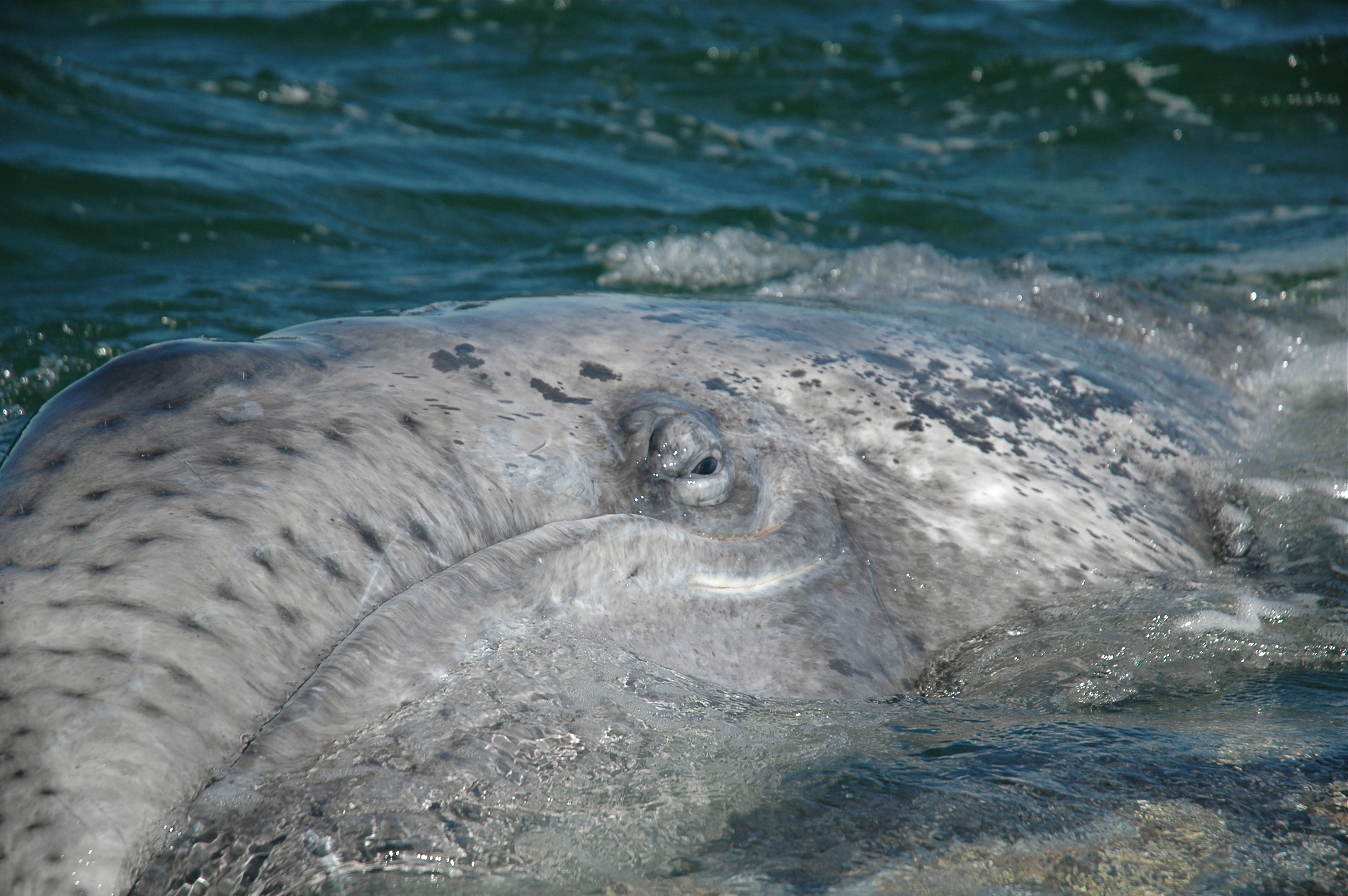
Adaptation is ZLI’s campaign focused on whales, dolphins, and porpoises (Cetacea), highlighting this class of animal’s well-documented sensory adaptations to optical depth. The core biological idea is evolutionary: light environments create structured constraints, and organisms adapt to them across time.
In the ocean, optical depth (how light shifts with depth, turbidity, surface conditions, and season) shapes what can be seen, when, and at what cost. Cetaceans offer a powerful comparative model for how sensory systems evolve under extreme signal conditions—low light, blue-shifted spectra, glare, scattering, and attenuation.
Adaptation also has a direct social purpose: to reduce anti-Asian hate (especially anti-Japanese, but not limited to this) by addressing how bias can distort scientific priorities, welfare standards, conservation narratives, and institutional trust. This campaign does not replace science with narrative. It strengthens science by improving measurement, perspective, and public understanding.
ZLI’s Adaptation Campaign funds research, builds measurement tools, and translates science into practical designs and compelling media—so donors and partners can support measurable improvements in animal welfare outcomes, conservation practice, and public education.
Feature animal
Whales, Dolphins & Porpoises (Cetacea) — chosen because their sensory biology sits at the crossroads of sensory ecology + evolutionary adaptation + environmental change (light gradients, depth, turbidity, coastal artificial light, and climate-altered optical conditions). Cetaceans are evolutionary specialists in perception under variable visibility, and their biology can anchor rigorous education about light as a governing ecological force.
Aquariums, marine research institutions, museums, and science media partners are natural collaborators in this initiative. Adaptation is structured around two pillars: research, media.
Pillar One: Research
Adaptation’s Research Endowment supports peer-reviewed cetacean science, early-career investigators, and translational sensory ecology focused on how optical environments shape behavior, health, and conservation outcomes.
Contributions fund:
• Seed grants and fellowships (cetacean sensory ecology + welfare science)
• Reproducible measurement standards for optical-depth environments (ZALA-aligned)
• Cross-disciplinary marine biology + human perception/communication research
• Long-term endowed research positions and institutional partnerships
This portfolio connects optical environments to migration timing, foraging strategy, social coordination, stress physiology, and population resilience.
Sponsors may underwrite named research awards, symposia, or permanent endowed chairs advancing the science of light and life.
Photobiological Connection (ZLI Framework)
Adaptation applies ZLI’s three scientific domains of photobiology—photo-physiology, sensory ecology, and integrative biology—to cetaceans as models of evolutionary adaptation to life across changing optical environments.
Photo-Physiology:
Photo-physiology examines how light interacts with the physical body of an animal, including biochemistry, biophysics, development, and aging. In cetaceans, evolutionary transitions from terrestrial ancestors to deep-diving marine mammals produced remarkable adaptations in visual systems, circadian regulation, and neurological processing under variable light conditions. Research in this domain investigates how depth-filtered light, diel cycles, and physiological constraints influence sensory organs, endocrine rhythms, and lifespan biology across decades.
Sensory Ecology :
Sensory ecology studies how animals construct spatial understanding of their environment through perception and cross-sensory integration. Cetaceans inhabit complex optical landscapes that include surface glare, scattering coastal waters, and the dim gradients of the deep ocean. Their perceptual world integrates vision with other sensory modalities such as echolocation and mechanosensory cues. Adaptation research examines how these systems combine to allow whales and dolphins to map space, navigate large ocean basins, and maintain stable perception in environments where light conditions change dramatically with depth and time.
Integrative Biology:
Integrative biology examines how light influences ecological systems over time, including food resources, seasonal cycles / the exploitation of time as a resource (phenology), and disease dynamics (epidemiology). In marine ecosystems, light governs primary productivity, shaping plankton dynamics and the distribution of prey species that sustain cetacean populations. Seasonal and geographic light cycles structure migration patterns, breeding timing, and prey availability. Integrative research therefore connects optical environments to marine food webs, long-term ecological stability, and population health.
Peer-reviewed research anchor points
- Cetacean visual systems show structural adaptation to depth-filtered light.
- Comparative retinal studies demonstrate spectral tuning toward blue-dominant marine environments and structural modifications suited to low-light, high-attenuation conditions. These findings support the evolutionary link between optical depth and sensory calibration.
- Migration and foraging patterns correlate with seasonal light-driven productivity.
- Marine food webs are structured by light-dependent primary productivity. Cetacean movement patterns align with seasonal optical cycles and prey distribution, reinforcing light as a governing ecological variable.
- Artificial light and coastal optical disruption alter marine behavioral systems.
- Emerging marine literature shows that artificial illumination, vessel lighting, and coastal development modify near-surface optical environments. Behavioral responses to altered light conditions are measurable and warrant standardized assessment tools.
- Scientific collaboration improves conservation accuracy and reduces systemic bias.
- Cross-national marine datasets consistently improve ecological modeling and welfare outcomes. Inclusive research frameworks broaden hypothesis formation, reduce blind spots in question design, and strengthen reproducibility.
- Bias in marine science and conservation narratives has measurable consequences — and diverse collaboration improves outcomes.
- Historical geopolitical tensions, including anti-Asian hate and politicized marine whaling discourse, have influenced funding priorities, data-sharing norms, and public trust in cetacean research. Peer-reviewed analyses of collaborative international datasets demonstrate that cross-cultural scientific partnerships improve model accuracy, reduce interpretive blind spots, and strengthen conservation outcomes.
Pillar Two: Community & Culture
(Framing the Science)
Adaptation recognizes that conservation science does not operate in a cultural vacuum. Public narratives about whales and dolphins have sometimes been shaped by media portrayals that emphasize conflict and caricature. In some cases, widely circulated productions such as The Cove and Whale Wars have been criticized for reinforcing anti-Asian stereotypes rather than fostering balanced conservation dialogue.
Adaptation promotes a different approach: science-centered conservation communication grounded in fairness, cultural respect, and evidence. The campaign highlights the importance of collaboration across cultures, including Asian and Asian-diaspora (AAPI) researchers, coastal communities, and institutions whose perspectives are often underrepresented in Western environmental media.
By strengthening inclusive participation in marine science, Adaptation seeks to ensure that conservation narratives are guided by rigorous research, cultural understanding, and mutual respect rather than sensationalism.
In practical terms, Adaptation™ supports:
- Fair, evidence-based conservation communication that distinguishes scientific findings from sensationalized narratives.
- Institutional integrity in welfare and conservation reporting, ensuring that claims about animals are supported by rigorous evidence.
- Cross-cultural scientific collaboration, including engagement with Asian and Asian-diaspora researchers, institutions, and coastal communities.
- Bias mitigation as a scientific quality practice, recognizing that accurate science requires critical examination of cultural assumptions and narrative framing.
By grounding conservation in rigorous science and inclusive collaboration, Adaptation advances a deeper understanding of how light shapes marine life across evolutionary, ecological, and cultural contexts.
Pillar Three: PhotoDiversity Media
Adaptation’s media slate brings rigorous cetacean science into culture while confronting how bias shapes institutions, narratives, and belonging. Five projects anchor the Campaign:
• The Afterlife of Whales™ (クジラの死後の世界) – an Inhumanities Animated Series
Two Ainu-Japanese sisters suffering post-traumatic stress after the 1980s Whaling Moratorium rise from poverty and stigma while researching and conserving whales and dolphins around the globe.
• Whalefall™ (クジラの落下) – a Kuyō Shōkon Cinematic Production
A distraught arsonist changes the lives of the Okijimas forever, after an international whaling moratorium impoverishes an idyllic village in Hokkaido.
• Adaptive Visions™ (適応) – a PhotoDiversity Documentary w/ Educational Shorts
Adaptive Visions™ explores the close relationships of cetacean vision to the optical depth of their environments. Each of the thirty-three episodes features a specific species of whale, dolphin, or porpoise, coordinated with The Afterlife of Whales.
VIEW AND DOWNLOAD THE PITCH DECK HERE
• Shontaku™ (神話上のクジラ) – Pholk Tales Animated Productions
Mother Tekka’s tortured fever dream distorts her children’s future in a horrific return to Ninevah.
• Tilly’s World™ (ティリーの世界) – a ChibiKama Playtime Production
Fun-loving Tilly Lilly brings haute couture and cruelty-free fashion to pre-K audiences, building awareness of constructed identity and care.
Media sponsorship supports production, educational distribution, and measurable audience reach—ensuring peer-reviewed science informs public imagination responsibly and at scale.
Why Adaptation Matters
(And Why It Requires Partnership)
Evolutionary sensory systems are built for specific signal environments. When optical environments shift—through coastal development, artificial light, climate-driven turbidity change, or habitat disruption—perception changes with them. The consequences scale from individuals to populations: altered foraging efficiency, mis-timed migration cues, disrupted social coordination, and compromised welfare.
Cetaceans offer an exceptional comparative model because their survival depends on stable perception under extreme visibility constraints. By advancing research, improving measurement standards (ZALA-aligned), and translating science through PhotoDiversity media, Adaptation converts peer-reviewed work into responsible public understanding and practical conservation influence.
Adaptation does not rely on symbolism. It relies on measurement, evolution, and perspective.
Partnership in this campaign is an investment in measurable, systems-level resilience—across species, across institutions, and across cultures.
Support Adaptation!
Your gift advances peer-reviewed research, integrated bird-friendly design adoption, and equitable community access to nature.
|
Donate to Adaptation → |
Employer matching may be available through your workplace giving program.
For real-estate donations visit www.saveabillionbirds.org contact us at 01.212.317.2927 directly.