 Advancing healthy aging
through light, biology, and wildlife research.
Otohime’s Time: Lifespan Ecology and Responsibility Across Generations
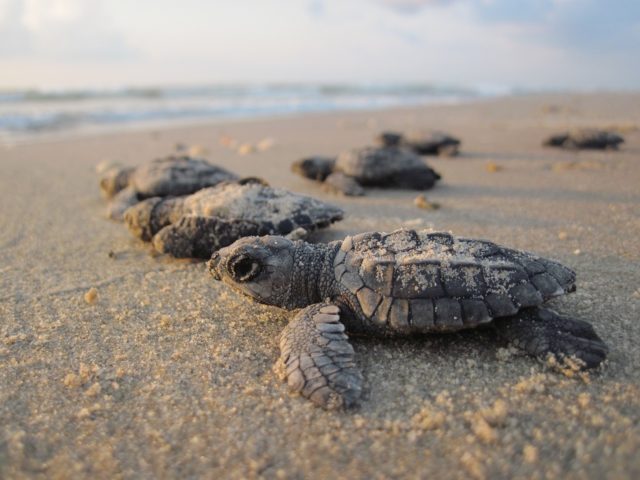
Sea turtles are among the longest-lived marine reptiles on Earth. Their survival depends on complex interactions between light, navigation, and environmental change across an entire lifetime that can span many decades. Hatchlings orient toward ocean horizons using natural light gradients. Juveniles move through nearshore environments shaped by coastal lighting and reflective surfaces. Adults navigate vast ocean basins and return to nesting beaches guided by subtle optical cues in the night sky and sea surface.
Because their biology unfolds over such long timescales, sea turtles provide a powerful model for understanding how light environments influence animal welfare and survival across the full arc of life. Otohime’s Time advances marine conservation within the ZLI Framework while translating lifespan photobiology into practical conservation, cultural engagement, and intergenerational responsibility.
This campaign integrates research, coastal design awareness, media storytelling, and intergenerational programs—ensuring that marine animal welfare is understood not only scientifically, but socially and culturally as well.
Feature animal
Sea Turtles (Chelonioidea)
Chosen because their biology sits at the crossroads of visual ecology + long-lived life history + coastal environmental change (horizon light gradients, artificial beachfront illumination, spectral distortion, and climate-shifted nesting conditions).
Sea turtles are evolutionary specialists in navigating complex optical environments across both ocean and land. Their survival depends on accurate interpretation of light signals during migration, feeding, nesting, and hatchling dispersal.
Their extraordinary lifespan also makes them powerful ambassadors for understanding how environmental decisions made today affect wildlife—and people—across generations. Marine biologists, coastal managers, conservation organizations, sea turtle rescue centers, aquariums, and community educators are natural collaborators in this initiative.
Otohime’s Time is structured around three pillars: research, PhotoDiversity media, and community engagement.
Pillar One: Research
Lifespan Photobiology and Marine Welfare
ZLI’s Otohime’s Time™ Research Portfolio supports peer-reviewed science and translational research exploring how optical environments influence marine animal welfare across life stages.
Contributions may support:
- • Research on hatchling orientation and artificial light disruption
- • Studies of coastal lighting impacts on nesting behavior
- • ZALA-aligned monitoring of beachfront optical environments
- • Long-term ecological studies of migration, navigation, and habitat use
- • Early-career fellowships in marine visual ecology and conservation science
This portfolio connects optical environments to:
- navigation and migration success
- nesting and hatchling survival
- physiological stress and orientation behavior
- long-term population resilienceNewYork2021
Sponsors may support named research awards, field monitoring programs, or institutional partnerships advancing the sciences of light and life in marine ecosystems.
Photobiological Connection (ZLI Framework)
Otohime’s Time™ applies ZLI’s three scientific domains of photobiology to long-lived marine species such as sea turtles. The campaign supports research that advances fundamental biological knowledge across the lifespan while also informing animal welfare oriented conservation practices.
Photo-Physiology:
Photo-physiology examines how light interacts with the physical body of an animal through biochemical and biophysical processes across the entire lifespan. In sea turtles this includes embryonic development within the egg, hatchling physiology, juvenile growth, adult reproduction, and the biological processes associated with longevity and aging. Light regulates hormonal cycles, metabolic pathways, cellular repair mechanisms, and visual system function. Because sea turtles can live for many decades, they provide a valuable model for understanding how light influences physiological stability, development, and aging in long-lived vertebrates.
Sensory Ecology :
Sensory ecology studies how animals construct spatial understanding of their environment using visual perception and cross-sensory modalities. Sea turtles interpret complex optical environments throughout their lives — from hatchling orientation and offshore dispersal to large-scale ocean navigation and nesting site fidelity decades later. These behaviors depend on the animal’s ability to interpret brightness gradients, spectral cues, and environmental signals in combination with other sensory systems. Research in sensory ecology reveals how turtles map their world and maintain spatial memory across vast oceanic landscapes.
Integrative Biology:
Integrative biology examines how light interacts with ecological processes across time, including food systems, seasonal cycles and the exploitation of time as a resource (phenology), and disease dynamics (epidemiology). Sea turtles move through multiple ecological zones during their long lifespans, linking coastal habitats, open-ocean systems, and nesting beaches. Studying how optical environments influence feeding patterns, migration timing, and long-term health helps scientists understand how environmental change affects both individual animals and broader marine ecosystems.
Pillar Two: Community and Intergenerational Programs
Otohime’s Time™ also explores programs that connect younger and older generations through conservation engagement.
These may include:
- • youth-elder conservation storytelling initiatives
- • environmental programming linking schools and senior communities
- • coastal education workshops focused on sea turtle conservation
- • intergenerational citizen science initiatives
Just as sea turtles move through distinct life stages over decades, people contribute to conservation differently at each stage of life.
Bringing generations together strengthens both environmental stewardship and community well-being.
Pillar Three: Coastal Implementation Opportunities
Otohime’s Time™ also explores applied conservation initiatives connected to coastal lighting environments.
Little Turtles Initiative
An extension of ZLI’s Little Birds Initiative, focused on improving coastal lighting and beachfront design to reduce disorientation of sea turtle hatchlings.
Target partners may include:
- • coastal hotels and resorts
- • beachfront municipalities
- • marine conservation organizations
- • tourism and hospitality industries
These collaborations would help translate marine photobiology into practical design strategies that benefit both wildlife and coastal communities.
Pillar Four: PhotoDiversity Media
Cultural Narratives and Environmental Understanding
Otohime’s Time expands scientific insight into public understanding through mission-aligned film, animation, and educational media produced in collaboration with PhotoDiversity Films. While research advances peer-reviewed science, the media portfolio translates those discoveries into narrative and cultural forms that deepen environmental awareness.
This initiative draws inspiration from the Japanese folktale Urashima Tarō, whose journey to the undersea palace of the sea princess Otohime raises profound questions about time, obligation, and responsibility. Different versions of the story emphasize the consequences of broken obligations—to family, to promises, and to the natural world. These themes resonate strongly with modern conservation challenges, particularly the long-term responsibility humans hold toward marine ecosystems and future generations.
Many media projects connected to this initiative incorporate Nikkei cultural perspectives, reflecting the global history of Japanese diaspora communities and their relationships to ocean environments.
Contributions support:
- Educational media exploring marine photobiology
- Narrative storytelling centered on ocean conservation
- Youth programming that connects folklore, science, and environmental ethics
- Film festival and museum partnerships
- International distribution aligned with conservation education
This portfolio connects science, storytelling, and cultural heritage—expanding access to marine conservation knowledge through creative media.
Otohime's Time™ media slate brings rigorous science into culture. Five projects anchor the Campaign:
- Appu & Arriba ™ (アップとレバント) – | INHUMANITIES Anime)
- Seeking to understand her father’s dementia, an aspiring cinematographer stirs images of La Llorina, La Escondida and La Malinche by uncovering a past no one wished to see.
- Caguama Negra (カグアマ・ネグラ) – | KUYŌ SHŌKON Cinema
- Wildlife cinematographer Jaime San Chiago unearths an unexpected slave trade through Brazil, Mexico, and the US, in a repressed Heart of Darkness that pits his empathy against his obligations.
- Otohime’s Time™ (乙姫の時代) – | PhotoDiversity Education)
- Otohime’s Time™ explores the developmental biology of turtles, and their highlighted relationships to light above and below the surface. While featuring the familiar attraction and disorientation of marine turtles due to coastal lighting, Otohime’s Time goes beyond this to show the importance of light to mental, gastronomic, developmental, and behavioral health in general.
- Urashima Taro Reboot ™ (浦島太郎) – | Pholktale Adaptation)
- In this stop motion adaptation of the classic tale, Princess Otohime seeks to heal a well meaning fisherman from his sins.
- La Llorina’s Playhouse™ (ラ・ロロナズ・プレイハウス) – a ChibiKama Playtime Production Despite the strict rules of its namesake, tiny Noriko performs mitzvahs for dementia patients at the La Llorina hospice despite her fears, teaching compassion to pre-K audiences.
Media sponsorship supports production, educational distribution, and measurable audience reach — ensuring peer-reviewed science informs public imagination responsibly and at scale.
Why Otohime's Time Matters
(And Why It Requires Partnership)
Sea turtles live on ecological timescales far longer than most human planning cycles. A turtle that hatches today may not reproduce for thirty years or more.
This makes conservation a profoundly intergenerational responsibility.
At the same time, human societies also experience changing roles across life stages. Youth bring curiosity and creativity. Working adults bring institutional capacity and resources. Elders contribute memory, mentorship, and perspective.
Healthy ecosystems—and healthy societies—depend on cooperation across these stages of life.
By supporting peer-reviewed research, cultural storytelling, intergenerational programs, and coastal lighting awareness, Otohime’s Time transforms marine conservation into a shared commitment across generations.
Partnership in this campaign is an investment in long-term ecological resilience—across species, across cultures, and across time.
Support Otohime's Time!
Your gift advances:
- peer-reviewed marine research
- science-grounded cultural storytelling
- intergenerational conservation engagement
- practical coastal lighting awareness
|
Donate to Otohime's Time → |
Employer matching may be available through your workplace giving program.
For real-estate donations visit www.saveabillionbirds.org contact us at 01.212.317.2927 directly.