Advancing ornithology through
light science, practical design, and inclusive nature access.
Save a Billion Birds!: Ornithology and Action
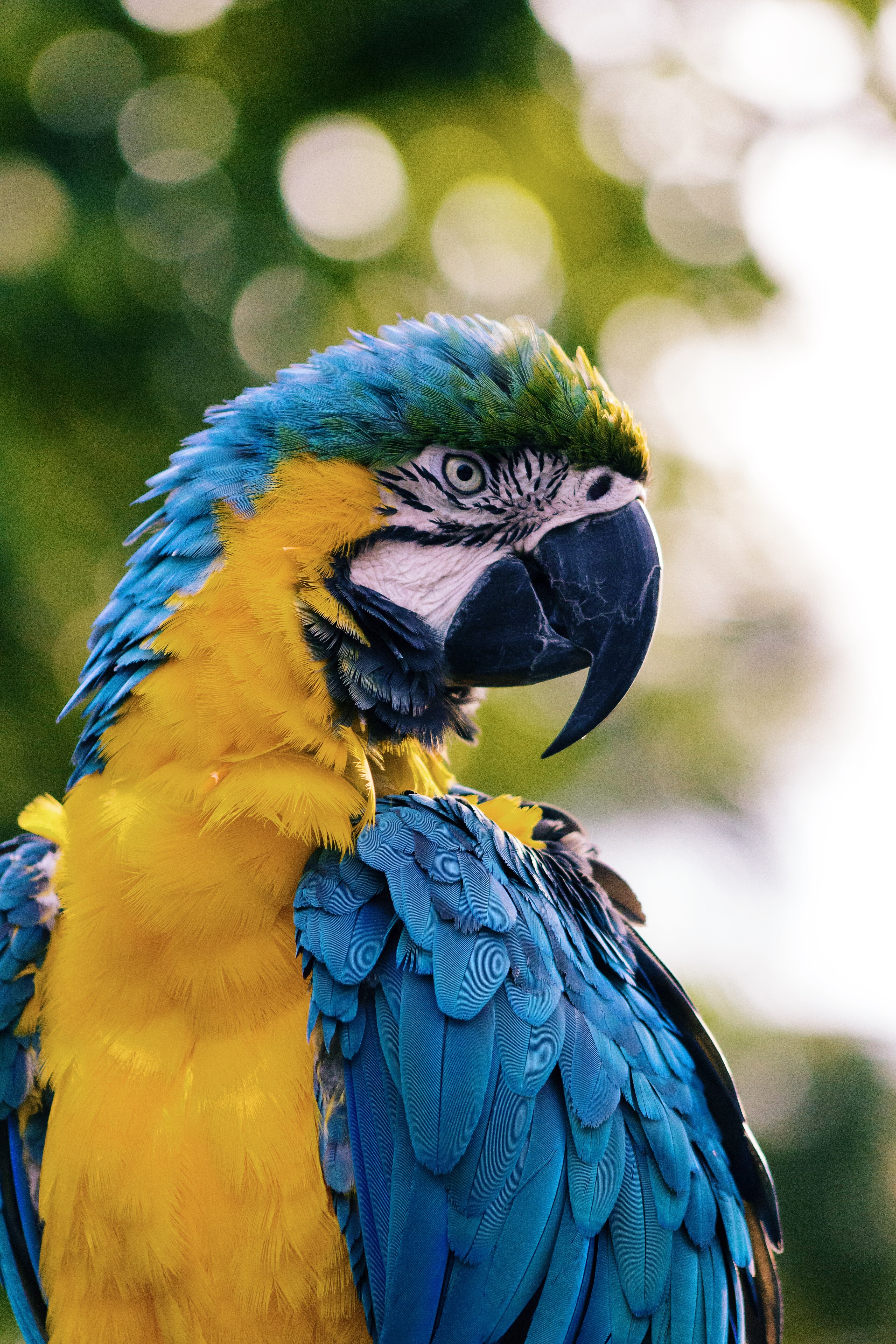
Birds are among the most visually sophisticated vertebrates on Earth. Their survival depends on finely tuned light perception — ultraviolet sensitivity, polarized light detection, and seasonal photoperiod regulation that governs migration and reproduction. Birds have been described as 'eyes with wings', and it's a powerful insight. ZLI's Save a Billion Birds™ advances ornithology within the ZLI Framework while translating that science into measurable conservation action.
This campaign integrates research, architectural reform, and equitable access — ensuring that avian photobiology informs both wildlife survival and civic responsibility.
Feature animal
Birds (Aves) — chosen because their sensory biology sits at the crossroads of visual ecology + migratory adaptation + environmental change (polarized light gradients, spectral reflectance, artificial night lighting, and climate-shifted seasonal timing). Birds are evolutionary specialists in perceiving optical structure across air, water, forest canopy, and urban space. Their physiology anchors rigorous education about light as a governing ecological force in terrestrial ecosystems.
Birders, ornithologists, urban ecologists, BirdLife International, nature centers, and science educators are natural collaborators in this initiative. Save a Billion Birds™ is structured around four pillars: research, practical design, media, and community access.
Pillar One: Research
ZLI's Save a Billion Birds™ Research Endowment supports peer-reviewed avian science, early-career investigators, and translational visual ecology focused on how optical and architectural environments shape behavior, health, and conservation outcomes.
Contributions may fund:
• Seed grants and fellowships (avian visual ecology + collision science)
• Data-driven science, such as collision monitoring and ZALA aligned light-assessment programs
• Adcocaacy Media and Nature Access Programs
• Long-term endowed research positions and institutional partnerships
This portfolio connects optical environments to migration timing, flight behavior, habitat navigation, stress physiology, urban survival, and population resilience.
Sponsors may underwrite named research awards, monitoring programs, symposia, media projects, or permanent endowed chairs advancing the sciences of light and life, including architectural science.
Photobiological Connection (ZLI Framework)
Save a Billion Birds applies ZLI’s three scientific domains of photobiology—photo-physiology, sensory ecology, and integrative biology—to birds, these 'eyes with wings' so crucial to our understanding of the world.
Photo-Physiology:
Photo-physiology examines how light interacts with the physical body of an animal, including biochemistry, biophysics, development, and aging. Birds possess some of the most sophisticated visual systems among vertebrates, including ultraviolet sensitivity, specialized retinal structures, and rapid neural processing for motion detection. Light regulates hormonal cycles, reproduction, migration readiness, and seasonal molting through photoperiodic endocrine pathways. Research in this domain examines how light shapes avian development from embryonic stages through adulthood and aging, and how physiological systems remain calibrated to changing environmental conditions.
Sensory Ecology:
Sensory ecology studies how animals construct spatial understanding of their environment through visual perception and cross-sensory integration. Birds navigate complex landscapes using optical cues including solar position, polarized light, spectral gradients, and horizon contrast. These perceptual systems guide flight, migration, predator avoidance, and foraging across large geographic scales. Research in sensory ecology explores how birds interpret these optical environments and how built structures, reflective glass, and artificial lighting can disrupt the spatial cues birds rely on to map and move through their surroundings.
Integrative Biology:
Integrative biology examines how light influences ecological systems over time, including food resources, seasonal cycles (phenology), and disease dynamics (epidemiology). In avian systems, light governs plant growth, insect emergence, and aquatic productivity, which in turn shape the food webs birds depend upon. Seasonal light cycles regulate migration timing, breeding windows, and resource availability across continents. Integrative research therefore connects optical environments to avian population health, ecosystem productivity, and long-term biodiversity stability.
Pillar Two: Practical Design
Integrated Certification for Bird-Friendly Development
Save a Billion Birds! advances a unified, science-based certification framework that addresses avian mortality through total threat-factor adoption — not piecemeal mitigation.
While many current programs focus on isolated measures (window films, seasonal light reductions, or voluntary policies), SBB promotes a comprehensive optical-environment strategy aligned with avian biology and measurable outcomes.
This pillar translates research into deployable standards across the full built envelope.
ZLI Bird-Friendly Certification System
ZLI’s tiered certification system provides clear, scalable benchmarks for adoption:
Certified
Foundational mitigation measures addressing primary collision risks in glazing and artificial light exposure.
85% effective by tested standards as all building surfaces must maintain an ABC threat factor of 20 or less.
Silver
Expanded façade treatment coverage and documented monitoring participation.
90% effective by tested standards, as all building surfaces must maintain an ABC threat factor of 10 or less.
Gold
Comprehensive treatment of glazing, façade reflectivity, nighttime illumination strategy, and integration of optical measurement standards.
95% effective by tested standards, as all building surfaces must maintain an ABC threat factor of 5 or less.
Platinum
Full-spectrum threat mitigation across glazing, lighting, orientation, monitoring, and long-term ecological reporting — aligned with ZALA measurement protocols and institutional transparency. 99% effective by tested standards, as all building surfaces must maintain an ABC threat factor of 1.
Each tier reflects cumulative adoption of known collision risk factors, encouraging systemic implementation rather than isolated compliance.
Contributions Support:
-
Independent validation of certified materials and façade systems
-
Field monitoring of performance by certification tier
-
Development of reproducible optical measurement standards (ZALA-aligned)
-
Architectural and engineering continuing education, including public media projects
-
Municipal and institutional pilot programs
-
Data reporting frameworks for ESG and sustainability disclosures
Why Integration Matters
Avian mortality is rarely caused by a single factor.
It is the interaction of:
-
Reflectivity
-
Transparency
-
Artificial night lighting
-
Vegetation placement
-
Migration timing
-
Urban density
Addressing one variable while ignoring others limits effectiveness.
ZLI’s Certification system encourages total adoption of known mitigation strategies within a structured, economically rational pathway.
The objective is clarity:
-
A building should know where it stands.
-
Investors should know what they are supporting.
-
Communities should see measurable reductions.
Finance & Incentives
ZLI’s 'Little Birds' Certification system integrates with ZLI’s Little Birds Initiative, aligning bird-friendly design with:
-
Stewardship participation
-
Corporate ESG signaling
-
Tax-aligned charitable engagement
-
Transparent ecological reporting
Bird-friendly design should not be niche compliance. It should be a recognized development standard and incentivized for the public good.
Pillar Three: PhotoDiversity Media
Public Education & Cultural Programming
Save a Billion Birds!'s Media Pillar expands scientific insight and practical design into public understanding through mission-aligned film, animation, and educational programming produced in collaboration with PhotoDiversity Films. While the Research Endowment advances peer-reviewed science and Practical Design implements measurable solutions, the Media portfolio translates these advances into narrative, educational, and cultural forms that broaden access to nature and environmental literacy.
Contributions support:
- Development of educational series grounded in avian visual ecology
- Narrative storytelling that explores birding, migration, and identity
- Youth programming that cultivates early conservation awareness
- Festival, museum, and institutional partnerships
- Global distribution aligned with conservation outcomes
This portfolio connects science, design, and culture — expanding the reach of collision mitigation and bird-friendly development through accessible storytelling. Sponsors may underwrite specific productions, educational distribution initiatives, or named media fellowships advancing public engagement with the science of light and life.
Suite Loglines
- The Green Year™ (信仰への恐怖 | INHUMANITIES Anime)
- a global coming-of-age journey following a young birder across continents, confronting migration, different forms of racism, and the preventable tragedy of the indifference leading to bird-window collisions.
- a global coming-of-age journey following a young birder across continents, confronting migration, different forms of racism, and the preventable tragedy of the indifference leading to bird-window collisions.
- Reparations™ (賠償金 | KUYŌ SHŌKON Cinema)
- a historical drama tracing Nikkei migration and intergenerational displacement, linking environmental identity, land, and resilience across continents.
- a historical drama tracing Nikkei migration and intergenerational displacement, linking environmental identity, land, and resilience across continents.
- Save a Billion Birds!™ (10億羽の鳥を救おう! | PhotoDiversity Education)
- a science-forward educational series exploring avian vision and perceptual ecology, translating collision mitigation research into classroom, museum, and architectural practice.
Download the Save a Billion Birds! Pitch Deck
- a science-forward educational series exploring avian vision and perceptual ecology, translating collision mitigation research into classroom, museum, and architectural practice.
- Du Maurier™ (デュ・モーリア | Pholktale Animation)
- ◦ a painterly reimagining of 'The Birds' through a child’s perspective, transforming ecological anxiety into compassion.
- ◦ a painterly reimagining of 'The Birds' through a child’s perspective, transforming ecological anxiety into compassion.
- Petah’s Party™ (ペタのパーティー | ChibiKama Playtime)
- a joyful stop-motion children’s series where creativity and bird discovery cultivate resilience, artistic confidence, and early conservation awareness.
Pillar Four: Community Access
Biking for Birds™
Save a Billion Birds!'s Community Access pillar expands equitable participation in birding while directly supporting collision mitigation and conservation education. Biking for Birds™ increases nature access by combining rideshare mobility, birding engagement, and structured programming into a scalable, community-based solution.
Contributions support:
- Deployment of rideshare bicycles designated for birding routes (ARC-aligned mobility access)
- Birding gear libraries to reduce economic barriers to participation
- Educational and fundraising programming tied to collision awareness
- Community-based collision monitoring and reporting initiatives
- Institutional partnerships supporting equitable outdoor access
This portfolio connects mobility, urban design, and environmental literacy — fostering inclusive access to birds while advancing measurable conservation outcomes. Sponsors may underwrite named mobility stations, community birding events, or endowed outreach initiatives supporting equitable nature access and collision mitigation awareness.
Direct Implementation
While research and certification advance systemic adoption, and access initiatives ensure efficiency and growth, immediate mitigation remains urgent. The Bird-Friendly Remediation Fund supports direct installation of approved bird-friendly materials in priority buildings and community institutions, with transparent reporting and measurable conservation outcomes.
Why Save a Billion Birds! Matters
(And Why It Requires Partnership)
Avian sensory systems are built for continuous, structured aerial environments. When optical environments shift—through reflective glazing, transparent façades, artificial light at night, and dense urban illumination—perception shifts with them. The consequences scale from individuals to populations: navigational error, increased collision mortality, disrupted migration timing, elevated stress physiology, and cumulative population decline.
But birds do not exist apart from people.
Access to birds—and to the landscapes they inhabit—shapes human well-being, cultural identity, and environmental literacy. For many communities, including members of the Black Birders Network and other historically excluded groups, safe and equitable access to outdoor spaces remains uneven. Urban design that degrades habitat, increases collision risk, and reduces visible biodiversity also narrows opportunities for meaningful engagement with nature.
Birds are often the most accessible form of wildlife in cities. When they disappear—or when their presence is diminished by preventable architectural harm—the loss is ecological and social.
By advancing peer-reviewed avian research, implementing integrated certification standards, supporting community mobility initiatives like Biking for Birds™, and translating science through PhotoDiversity media, Save a Billion Birds converts measurement into mitigation and conservation into shared participation.
SBB does not rely on symbolism. It relies on photobiology, systems design, and equitable access.
Partnership in this campaign is an investment in measurable resilience—across species, across cities, and across communities.
Support Save a Billion Birds!
Your gift advances peer-reviewed research, integrated bird-friendly design adoption, and equitable community access to nature.
|
Donate to Save a Billion Birds → |
Employer matching may be available through your workplace giving program.
For real-estate donations visit www.saveabillionbirds.org contact us at 01.212.317.2927 directly.